
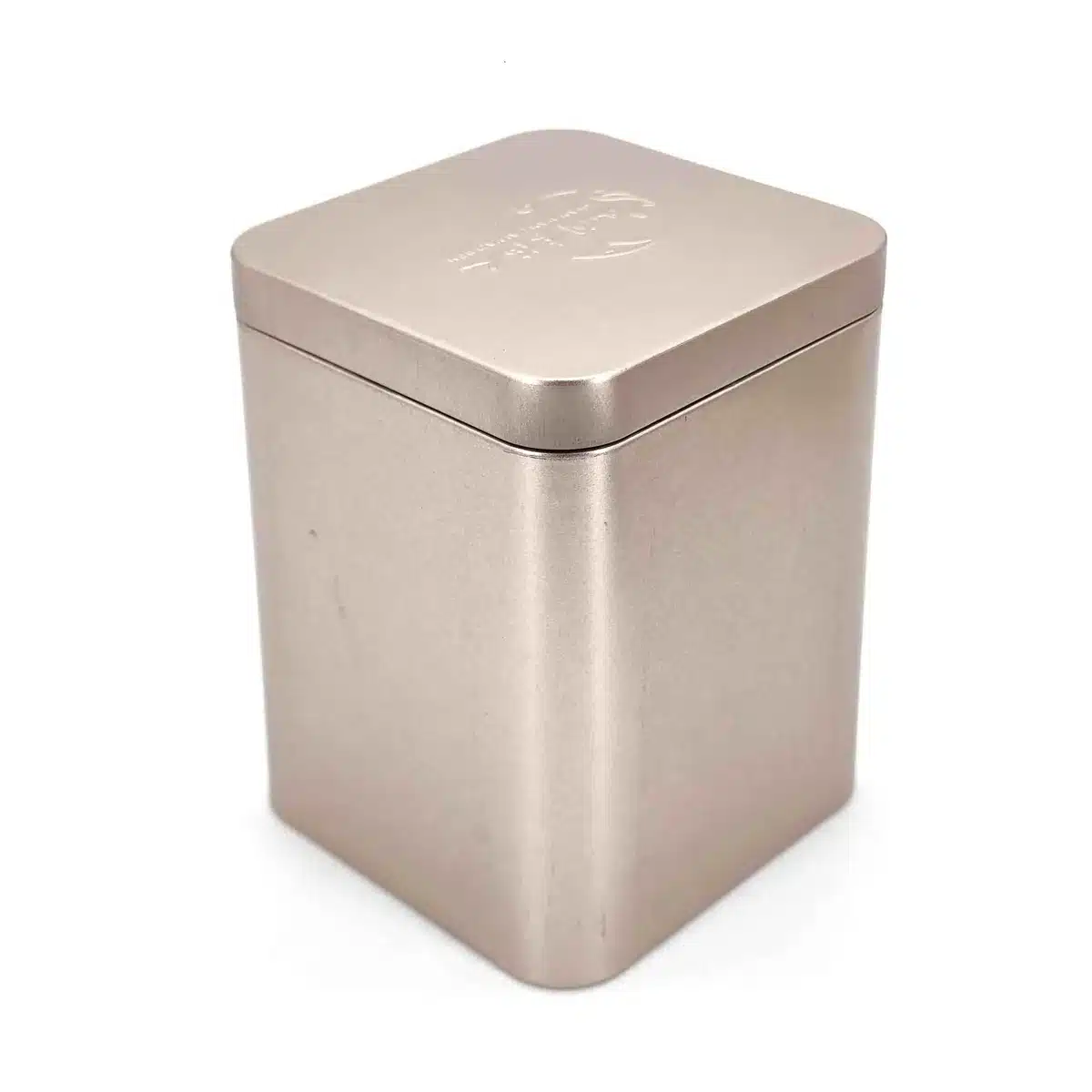
The right tin box is the format that protects the product, works with the filling and packing process, presents the brand well and ships efficiently. Start with the product and usable internal space—not a shape name alone. Junmei can compare existing round, rectangular, square and special-shape molds before recommending whether a new tool is commercially justified.
Start with six product inputs
Before choosing a tin, define the information that controls its real fit:
- Product dimensions or fill volume. Send the actual product size, a physical sample, target fill weight, bulk density or inner-bag dimensions as applicable.
- Contact method. Confirm whether the product will contact the tin directly or use an inner bag, greaseproof paper, cup, tray, liner or another primary pack.
- Required clearance. Allow room for removal, a tray or divider, decorative presentation, filling tolerance and any protective material.
- Opening experience. Consider who opens the pack, how often it will be reused and whether the lid should lift, slide or hinge.
- Retail and display needs. Define the front-facing artwork area, stacking requirement, shelf footprint and whether a window, handle or special structure is needed.
- Shipping packout. A small dimensional change can alter pieces per carton, protective spacing and freight efficiency.
When exact product data is not ready, Junmei can begin with photographs, reference packaging and a product sample, then narrow the options during the custom tin development process.
Compare the main shape families
| Shape family | Common advantages | Points to verify before approval |
|---|---|---|
| Round | Natural hand feel, clean wraparound graphics and familiar formats for tea, coffee, candy, cookies and candles | Product diameter, lid depth, stacking, label orientation and carton layout |
| Rectangular | Large front and side artwork areas; efficient use of shelf and outer-carton space | Corner radius, usable internal length and width, insert fit and lid alignment |
| Square | Balanced display area and practical multi-piece arrangements | Internal corner clearance, product orientation and carton nesting |
| Special shape | Strong campaign recognition and differentiated gift presentation | Forming feasibility, artwork distortion, tooling, insert design, packing protection and schedule |
These are starting points rather than application rules. The same food, gift or promotional product may work in several shapes depending on presentation, budget and packout priorities. Buyers can review Junmei’s available tin box shape categories before requesting a closer mold match.
Size means usable internal space, not only outside dimensions
A nominal outside size does not tell the full story. The lid overlap, rolled edges, seams, corner radius, bottom profile and any internal step can reduce usable space. For accurate selection, check:
- the maximum product length, width or diameter;
- total product height after the lid is closed;
- the inner bag, tray, paper cup or insert at its production tolerance;
- removal clearance for the end user;
- headspace needed for filling or presentation;
- whether the product may settle, expand or move during transport.
Junmei can assess the proposed tin with product or packing samples. Final capacity and fit should be approved from the confirmed structure or physical sample, not inferred only from an external dimension shown online.
Check the lid, insert and packout as one system
The body and lid should not be selected in isolation. Slip lids, plug-style lids, hinged structures, double-lid arrangements and other closures create different opening behavior and internal clearances. Inserts, trays, dividers and liners can improve presentation or reduce movement, but they also affect height and assembly.
For food-related projects, specify whether the tin is the direct-contact pack or a secondary container. Most Junmei tins can provide reliable lid fit and strong moisture protection for dry products, but a strict airtight requirement must be tied to a suitable structure and an agreed sealing or leakage test. Do not treat every decorative tin as a pressure vessel, liquid container or hermetic can.
Outer packing also belongs in the size decision. Junmei can evaluate carton quantity, protective layers, multi-layer arrangements, top clearance, stacking and project-specific drop or vibration verification. This prevents a visually attractive tin from becoming inefficient or vulnerable in export transport.
Existing mold or new tooling?
Existing formats are normally reviewed first because they can reduce tooling cost and development time. A close existing size may be the best commercial choice when the product, insert and shelf presentation still work correctly.
New tooling becomes reasonable when a project needs a proprietary dimension, special shape, unique lid geometry, structural function or a volume program that supports the investment. Tooling decisions should account for forming feasibility, artwork position, sampling, maintenance and repeat-order control—not appearance alone. Junmei’s integrated manufacturing capabilities allow structure, tooling, printing, forming, inspection and packing questions to be reviewed together.
A practical approval sequence
- Share product data, reference packs, quantity and target market.
- Shortlist existing formats and identify any functional gaps.
- Confirm the proposed external and usable internal dimensions.
- Define lid, insert, contact method, coating and packout.
- Place artwork on the approved dieline.
- Approve the physical sample for fit, opening, print and finish.
- Lock the reference standard for production and repeat orders.
Need help comparing formats? Send Junmei the product sample or dimensions, preferred presentation, order quantity and destination through the RFQ page. The team will review existing mold options first and identify any information still needed for a usable recommendation.