
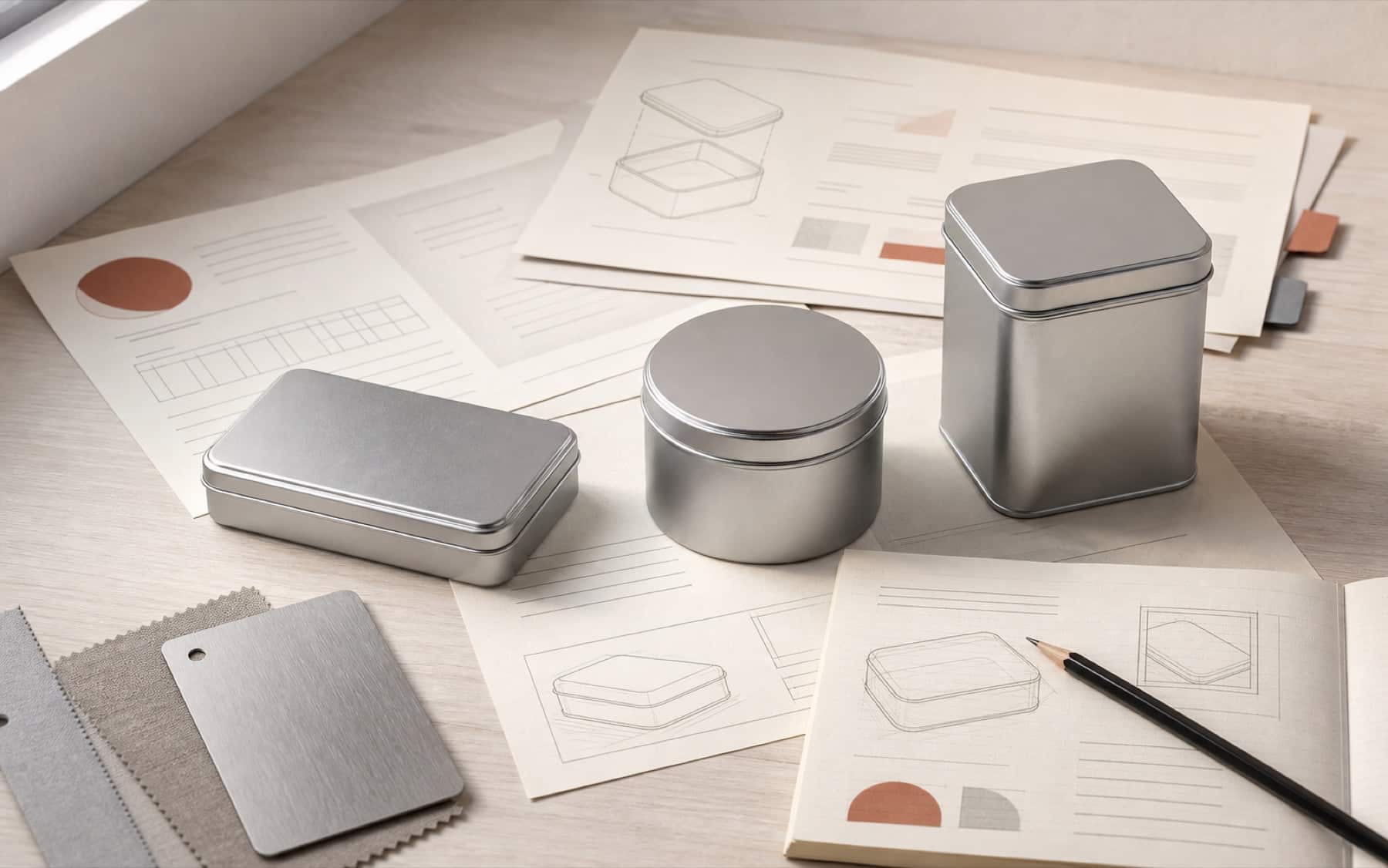
Approve a custom tin sample against a written checklist, not general appearance. Confirm structure, usable dimensions, lid fit, printing, finish, interior surface, insert and packing, then record the accepted sample and artwork version. Any item not tested or approved should remain an open project condition rather than an implied guarantee.
Prepare the approval environment
Review the sample with the latest specification, controlled artwork, color reference, product or inner-pack sample and intended carton arrangement. If several people approve the project, nominate one controlled decision record so email comments and obsolete artwork do not conflict.
Use representative lighting for color and surface review. Measure with appropriate tools, and test the actual product fit rather than an unrelated substitute whenever possible.
Sample approval checklist
| Review area | What the buyer should check | What to record |
|---|---|---|
| Structure and dimensions | External size, usable internal space, shape, seams and component orientation | Measurement points, tolerances and approved structure |
| Lid and opening | Lid fit, opening force, closure alignment, hinge/slide action and repeated normal handling | Accepted feel and any functional test method |
| Product fit | Product, inner bag, tray, liner, divider, cup or insert arrangement | Approved sample/packing combination and headspace |
| Print and copy | Correct version, spelling, language, barcode position, logo and front orientation | Master artwork file name and proof version |
| Color and finish | Agreed color reference, matte/gloss/metallic appearance and visual consistency | Viewing reference and retained sample |
| Emboss/deboss | Position, height/depth, edge definition and print alignment | Tooling/sample approval and acceptable registration |
| Interior and contact | Intended coating, clean interior and direct/indirect contact arrangement | Material/coating specification and required document scope |
| Packing | Surface protection, pieces per carton, dividers, top clearance and carton marks | Approved packout and any transit-test scope |
Check dimensions and usable space
Measure the dimensions named in the specification, but also confirm real product use. Rolled edges, lid overlap, seams, corner radius, bottom shape and insert tolerances affect usable space. For powders, loose products or products sold by fill weight, approve the pack using the actual bulk density or inner bag rather than assuming that nominal capacity equals product weight.
If the customer or filler has a packing line, check feeding, handling and closing requirements on that line. Junmei normally supplies empty tins; filling, nitrogen flushing, vacuum, final sealing and line validation are commonly completed by the buyer or filling partner unless a separate service is agreed.
Evaluate lid fit and sealing as separate questions
Lid fit includes alignment, opening, closing and normal handling. A tin can have a secure, moisture-protective fit without meeting a strict hermetic or airtight definition. If the project requires sealing verification, specify the tin structure, test method, sample condition and acceptance result.
Junmei can conduct lid-fit, air-leak or other project-specific checks and can support customer or third-party protocols. Do not approve an undefined claim such as “100% airtight” from hand feel alone.
Inspect print, color and surface finish
Compare the physical sample with the approved artwork and color reference. Check small copy, color separation, logo position, metallic areas, varnish, matte/gloss direction and the appearance after forming. Screens and office printouts are not reliable physical color standards.
Review embossing and debossing for position, definition, depth and alignment with print. Also look at rolled edges, corners, seams and other formed areas for visual impact. Decorative tin surfaces are not absolutely scratch-proof; agree on any abrasion or handling test that matters to the real distribution environment.
Confirm the interior and product-contact arrangement
Verify whether the sample represents the approved material and internal coating. For direct food contact, the intended food type, filling/storage conditions and destination market should control the supporting document review. If an inner bag, liner, paper, tray or cup is part of the system, approve it together with the tin.
Available reports should match the material, coating and conditions under review; a report for another component or material is not universal evidence. The food-contact document guide explains this scope.
Test inserts, presentation and transport packing
Place the real product in the tray, divider, liner or custom insert. Check movement, removal, multi-layer arrangement, headspace and any printed card or accessory. Then review the outer carton, surface protection, stacking and pallet arrangement.
Junmei can perform project-specific drop or vibration tests at the sample or finished-goods stage. Define the packed configuration, test method and acceptance standard first; a test on one packout does not automatically validate a different carton or transport route.
Record approval and open points
The decision record should contain:
- approved sample ID or dated photograph;
- controlled artwork and specification version;
- color/finish reference;
- approved structure, coating, insert and packout;
- accepted test results;
- deviations accepted by the buyer;
- unresolved points and the person responsible;
- date and authorization to begin production.
Junmei retains approved samples and color references to support batch consistency and future orders. For repeat programs, transfer these items into a repeat-order reference pack rather than relying on memory.
Need the sample plan defined before production? Send the specification, artwork, product/inner pack and critical acceptance points through the RFQ page. Junmei will identify which checks can be completed in-house and which require customer, filler or third-party validation.