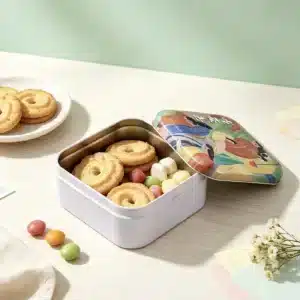
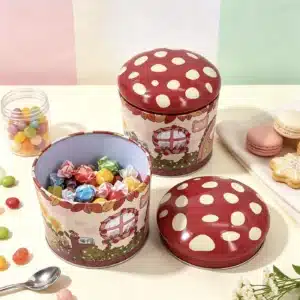
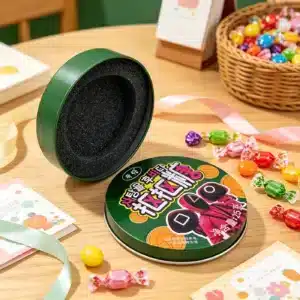
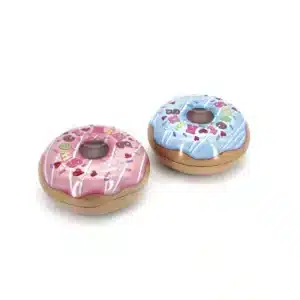
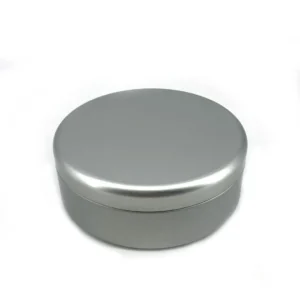
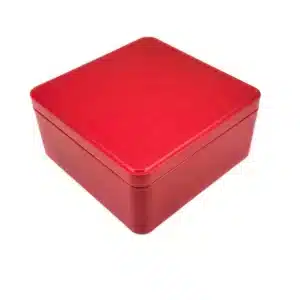
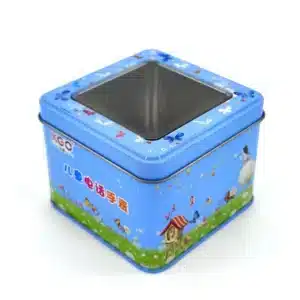
01Start with the candy type, piece condition and sales format.
State whether the tin will hold hard candy, mints, wrapped confectionery, assorted pieces or a gift presentation. Provide piece dimensions, count, unit wrapping and product sensitivity where possible. A pocket tin used repeatedly has different handling needs from a seasonal assortment opened once.
Junmei can assess direct-contact and inner-pack routes, but product formula, shelf life and storage conditions remain part of the customer or filling partner’s product validation.
02Convert piece count into a usable internal layout.
Outside dimensions do not determine how many pieces will fit. Seams, corner radii, rolled edges, lid engagement and any paper, cup, liner, tray or insert reduce usable space. Irregular candy shapes may also settle or bridge differently during filling and transport.
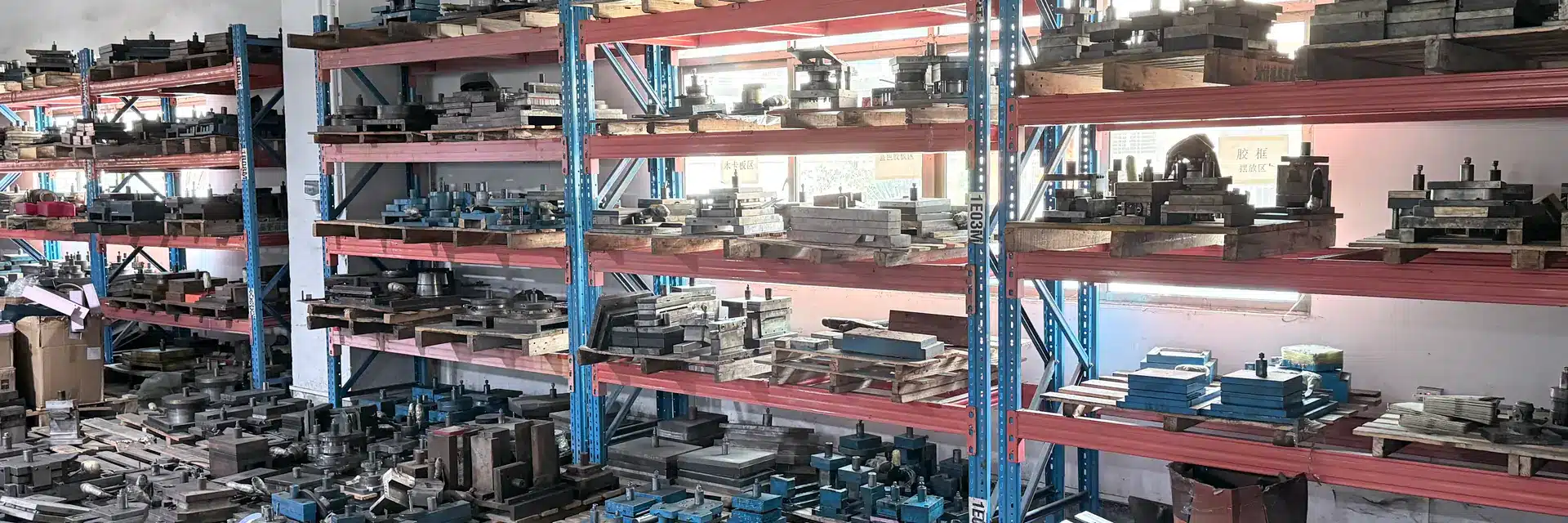
Send physical samples, a piece drawing or a confirmed unit pack when available. Junmei can compare the real layout against current molds and identify whether a size adjustment or new tooling is needed.
03Choose the lid and opening experience for the user.
Slip lids, hinged lids, slide tins and other closures support different portability, access and display goals. A compact tin should be reviewed for lid fit, edge condition, opening force and the risk of accidental opening under its intended use and packing conditions.
The chosen closure should also suit the filling sequence and leave enough headspace for product movement or an insert. Final fit is confirmed on approved samples rather than promised from a generic lid name.
04Define direct contact or the inner-pack system by project.
Candy can be packed in direct contact with a project-selected tin or with an inner bag, liner, paper, tray, cup or insert. The correct combination depends on product ingredients, surface behavior, grease or aroma concerns, market requirements and the desired presentation.
Tinplate, inner coating, accessory materials and supporting documents are confirmed for the intended contents and destination. Food-safe capability does not make every existing coating or accessory universally suitable.
05Use shape and decoration to support recognition without losing function.
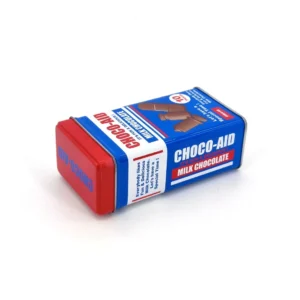
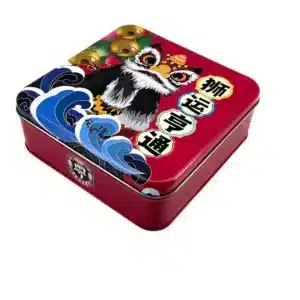
Round, rectangular, pocket and special-shaped tins can create different shelf and carry experiences. CMYK or Pantone spot-color printing, varnish, metallic effects, embossing and debossing are evaluated against formed areas, lid movement and abrasion points.
For flavors, markets or seasonal collections, provide an artwork-version matrix and quantity by design. Approved samples or color references can support version control and repeat-order comparison.
06Plan filling, protection and transport around the approved packout.
Junmei usually supplies empty tins, and can also assess packing or final-sealing support for suitable orders. The exact responsibility split is confirmed before quotation. The filling method should avoid damaging printed surfaces, rolled edges, closures or product pieces.
Carton layout, dividers, surface protection and project-specific drop or vibration checks are planned for the selected tin and packout. No universal breakage, wear or shelf-life result is promised before validation.
07Send the commercial and technical brief together.
MOQ
Starts from 3,000 pieces. Final MOQ depends on size, structure, printing, artwork versions, inserts, packing and tooling.
Samples
Typically ready in 3–7 working days after specifications and artwork are confirmed. Product-fit trials, special shapes, accessories or new tooling can change the plan.
Bulk Production
Typically about 25 days after required sample or artwork approval and order confirmation. Final timing depends on quantity, versions, structure, inserts, packing and production loading.
For a useful recommendation, send:
- candy type, piece dimensions, count, weight and wrapping details
- product samples, drawings or unit packs when available
- direct-contact, bag, liner, paper, cup, tray or insert direction
- preferred tin shape, usable depth, lid and opening experience
- filling method and any portability requirement
- artwork, finishes, version matrix and quantities
- target market, material-document and test requirements
- packing, delivery destination and required delivery date.
With these inputs, Junmei can compare relevant candy tins and identify what still requires fit, contact-material, tooling, packing or test confirmation.